
Contigo
ContigoTeamSocial
3.55.00 Reviews
- Version
- 1.2.1.0
- Installs
- 100.00K
- Age Rating
- Teen
Screenshots


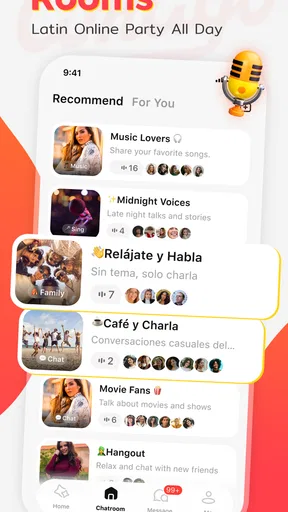


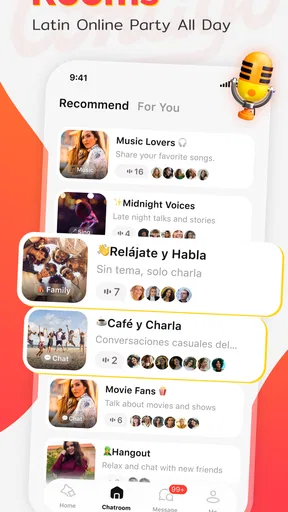

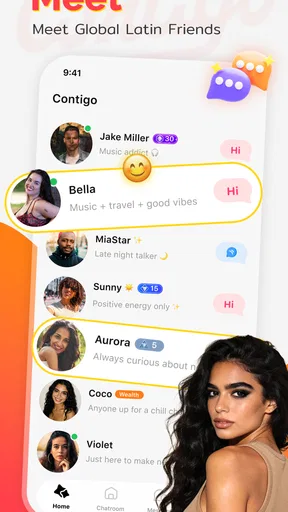
Our Review of Contigo
 Analysis by Appyee
I approached Contigo as a social app for people who want conversation to feel more immediate than a stream of posts. Its focus is simple: meeting friends from different places and sharing moments through voice and conversation. That makes the important question less about how many buttons it has and more about whether it fits the way you actually communicate.
In my experience, this is the kind of app that makes sense when text messages feel too flat but a full video call feels too demanding. You can use it for casual contact, spontaneous chats, or keeping an international friendship alive without arranging a formal appointment every time. It is free to install, developed by ContigoTeam, and aimed at a Teen audience, so it sits comfortably in the space between relaxed social networking and live communication.
The app has reached over one hundred thousand installs, while its average rating is around three and a half. I read that combination as a useful warning to set expectations sensibly: Contigo has enough interest to be worth exploring, but it is not a universally polished social destination. I would try it because of its conversational idea, not because the numbers alone promise a finished replacement for every other communication tool.
How I would decide whether Contigo belongs on my phone
I would judge Contigo by whether it earns a small, practical role alongside the ways I already keep in touch—not by whether it replaces them. I’d start with one conversation I genuinely want to have, then notice whether voice makes that exchange easier or more meaningful. That gives me a clearer basis for deciding if the app fits my habits and the people I want to reach.
Start with the kind of connection you want
The first decision is whether you want to discover people and talk in a more personal way, or simply keep up with contacts you already know. Contigo is most appealing in the first situation, especially if voice makes communication warmer for you. A text-first network is better when you want to browse quietly, compose careful replies, or keep a written record of every exchange.
I would also ask how comfortable you are with conversations that may begin casually. Voice communication can create a stronger sense of presence, but it asks for more attention than leaving a comment. You need a reasonably private moment, a willingness to speak, and enough patience to deal with different accents, time zones, and conversation styles. If you prefer complete control over when you respond, a messaging app may remain the easier choice.
Contigo’s appeal is therefore connected to behavior, not just features. It suits someone who thinks, “I would rather hear a real person than send another short message.” It is less convincing for someone who wants an organized community around a specific hobby, a professional network, or a heavily moderated public feed. The app’s broad social purpose gives it flexibility, but that same breadth may make the experience feel less focused than a specialist platform.
Check the practical fit before inviting friends
Because this is a social app, its usefulness depends heavily on whether the people you want to reach are willing to use it too. I would not install it expecting the app alone to solve the friend-discovery problem. Instead, I would first think of one or two realistic contacts: a friend abroad, a language-exchange partner, or someone I already enjoy speaking with. That gives the app a fair test rather than leaving it to compete with an empty contact list.
A practical test is to use it during a normal week instead of judging it after a single opening session. Try a short conversation when you have a few minutes, then see whether returning to the app feels natural. Notice whether the flow helps you get into a conversation quickly or whether you spend more time managing the app than talking. For a social product, that difference matters more than a visually attractive first impression.
I would also pay attention to boundaries. A voice-based connection can become personal quickly, so I would avoid sharing private information with new contacts and would leave any interaction that feels uncomfortable. The Teen content rating is a useful reminder that younger users may encounter social situations requiring judgment. Parents and guardians should discuss sensible privacy habits rather than treating the rating as a guarantee that every conversation will be suitable.
What the current version tells me
The current version is 1.2.1.0, and it supports devices running Android 7.0 or later. That broad minimum requirement makes the app approachable for people using older Android phones, which is valuable if your friends are not all carrying recent hardware. At the same time, compatibility alone does not tell me how smoothly every device will handle live communication, so I would judge performance on the phone and network I actually use.
For an app centered on voice and conversation, the quality of the surrounding situation matters as much as the software. A noisy room, weak connection, or phone microphone covered by a case can make a good idea frustrating. My tip is to test a brief exchange with headphones before deciding that the app itself is the problem. This also helps you learn whether you prefer speaking freely or keeping the interaction short and controlled.
Where Contigo feels strongest
The clearest strength is its emphasis on a more human style of contact. Text is efficient, but it often strips away tone. Voice can make a quick check-in feel more genuine, especially between people who live far apart. I can see Contigo working well for a friend who has moved overseas, a learner practicing conversation with someone from another country, or a small group that wants to share an everyday moment without preparing a polished post.
Another advantage is the low financial barrier. The app is free, so trying it does not require committing to a subscription before you know whether your friends will use it. That is important for a social service because adoption is already the biggest hurdle. I would install it, test a few conversations, and only then consider whether any optional spending is worthwhile.
The global angle also gives ordinary conversations more variety. Instead of using a social feed mainly to watch familiar contacts, you can approach it as a way to hear different perspectives and communication habits. That does not automatically make every interaction meaningful, but it creates a reason to return that is different from endlessly scrolling through updates.
Three ways I would use it beyond casual browsing
My first practical use would be a short voice check-in routine. Rather than waiting until there is enough time for a long call, I would use Contigo for a few minutes after work or during a quiet break. The trade-off is that short conversations need a clear purpose: asking how someone is doing, sharing one small event, or arranging a longer chat. Without that intention, the app may feel like another place to open and close without accomplishing anything.
My second use would be language practice with a known contact. Voice exposes pronunciation and rhythm in a way that typed messages cannot. I would agree beforehand on a simple topic and keep the conversation friendly rather than treating it like a lesson. The useful insight here is that the app can support confidence-building, but it should not be mistaken for a structured language course. If you need exercises, corrections, or a curriculum, a dedicated learning service is a better fit.
My third use would be sharing a moment while it is happening, rather than documenting it afterward. For example, I might talk to a friend while walking through a market or preparing a meal, giving them a sense of the occasion through conversation. That is more intimate than uploading a finished photo, but it also requires awareness of other people’s privacy and your own surroundings. I would keep the exchange considerate and avoid treating public spaces as a private studio.
Where the usual alternatives may fit better
Contigo is not automatically better than established messaging apps. If your main goal is reliable contact with family and close friends, a service everyone already uses will usually win because you do not have to persuade anyone to join. Those alternatives may also be preferable when you need long message histories, file sharing, group coordination, or communication that can be answered later.
A video-calling app is the stronger option when facial expressions, presentations, or a planned group meeting matter. Contigo’s voice-centered idea is more relaxed, but that simplicity can become a limitation if you need visual context. On the other hand, a public social network may be better for discovering news, creators, or communities around a particular interest. Contigo makes more sense when the conversation itself is the point.
There is also a difference between global connection and purposeful matching. If you want to find people specifically for gaming, professional networking, study support, or a local activity, a category-focused community will probably provide clearer expectations. I would choose Contigo for open-ended human contact, not for a specialized directory of experts or a carefully organized group experience.
Small frictions that could change my decision
The rating of about three and a half suggests that the experience may not be equally satisfying for everyone. I would interpret that cautiously rather than assuming one universal flaw. Social apps can feel excellent when the right people are available and disappointing when conversations are sparse, awkward, or poorly timed. The product’s value is tied to the quality of interaction, which is harder to control than the interface.
Voice also introduces friction that text users may underestimate. You cannot always answer immediately, and you may not want to speak in public. Someone who works in shared spaces, travels frequently, or prefers silent communication could find the core idea inconvenient. For that person, Contigo may be useful as an occasional supplement but not as a primary communication tool.
I would be careful with the optional purchases as well. Individual in-app items range from forty-nine cents to ninety-nine dollars and ninety-nine cents. That is a wide span, so I would not spend simply to make the app feel more active or to respond to social pressure. My approach would be to use the free experience first, understand exactly what an item adds, and set a personal limit before buying anything.
The real cost of switching
Moving to a new social app costs more than storage space. The main cost is coordination: explaining why friends should install it, finding a time to try it, and accepting that not everyone will stay. If you already have dependable conversations elsewhere, Contigo has to offer a noticeably better feeling or a useful new connection to justify that effort.
I would reduce the switching cost by treating it as a side channel rather than deleting existing apps. Invite one trusted person, agree on a short test conversation, and compare the experience honestly. If the exchange feels more natural than your usual text thread, expand gradually. If it feels forced, you have learned something without disrupting your established contacts.
There is a second cost: attention. A global social environment can encourage you to check for new conversations more often than planned. I would keep notifications and usage habits under control, especially if I were using the app for relaxation. The best version of Contigo for me would be one that supports intentional conversations, not one that turns every quiet moment into another obligation to be socially available.
Who I would recommend it to
I would recommend Contigo to someone who enjoys meeting people across borders, values voice more than long written exchanges, and has at least one person willing to try it with them. It is particularly interesting for casual international friendships, low-pressure conversation practice, and those small daily check-ins that are too personal for a public post but too brief for a formal call.
I would recommend starting with a clear purpose. Decide whether you want to reconnect, practice speaking, or share occasional moments. That simple choice makes it easier to judge the app fairly and prevents the common mistake of expecting a new social network to become useful without any social plan behind it.
The free entry point is another reason to experiment, while the Teen rating means younger users should approach conversations with sensible privacy boundaries. I would keep personal details limited until trust has developed, and I would never treat a friendly tone as proof that a stranger is safe.
Who should probably skip it
I would skip Contigo if I need a mature work tool, a detailed community around one subject, or a dependable replacement for a messaging service that all my contacts already use. I would also skip it if I strongly dislike speaking with unfamiliar people or if my daily routine rarely gives me a quiet place for voice conversations.
People who want a polished content feed may be happier elsewhere, while users seeking structured learning should choose a platform built around lessons and feedback. Contigo’s strength is its open conversational character, and that is exactly what makes it less suitable for users who want strict organization, predictable outcomes, or a narrow purpose.
My recommendation after weighing the trade-offs
After considering the audience, the free starting point, the global conversation angle, and the possible friction of voice-based socializing, I see Contigo as a worthwhile experiment rather than an essential app for everyone. Its best moments are likely to come from genuine, intentional exchanges, not passive browsing or impulse purchases.
My recommendation is to try it as a focused companion to your existing social tools. Begin with one trusted contact, test a short voice conversation, and decide whether the interaction feels more personal than your usual alternative. If it does, Contigo has a clear place in your routine. If you need organized groups, silent messaging, professional reliability, or guaranteed activity, another category of app will serve you better.
For me, that makes Contigo appealing precisely because it does not need to replace everything. It offers a different way to stay present with people, and that is enough reason to give it a careful trial. Just keep expectations realistic, protect your privacy, and let the quality of your actual conversations—not the promise of a new network—decide whether it deserves a permanent place on your phone.
Verdict
Strengths of Contigo
- Live bus tracking helps reduce waiting time at stops.
- Route planning combines nearby stops with scheduled services.
- Service alerts can warn users about delays or route changes.
- Saved stops and routes make regular commutes easier to check.
- Clear map views help locate buses and stops quickly.
Limitations of Contigo
- Coverage and accuracy depend on the local transit agency.
- Some routes may show limited or outdated real-time information.
- The app can use noticeable battery and mobile data with location enabled.
- Interface features may differ between supported cities.
- Occasional connection issues can delay map and arrival updates.
Similar Picks in This Category
View All
Meta Platforms, Inc.4.6

Instagram4.0

Likee-Live, Chat & Party Games
Likeme Pte. Ltd.4.4

Facebook Lite
Meta Platforms, Inc.4.5

TikTok - Videos, Shop & LIVE
TikTok Pte. Ltd.4.0

Moj: Free Short Drama & Reels
ShareChat4.1
Frequently Asked Questions
What is Contigo and what can I use it for?
Contigo is a mobile application designed to help users stay connected and manage their everyday interactions from one place. Depending on the version available in your region, it may include communication, community, service, or account-management features. Before downloading, check the app-store description carefully because Contigo can refer to different services, and available tools may vary by country, platform, and account type.
Is Contigo free to download and use?
Contigo can generally be downloaded at no cost, but some features may require registration, a subscription, in-app purchases, or access through an organization or service provider. Users should review the pricing information shown on Google Play or the App Store before creating an account. Also check whether mobile data, messaging, transaction, or other provider charges could apply while using the application.
What information does Contigo require during registration?
The registration process may request basic details such as your name, email address, phone number, location, or account credentials. Some versions can also require verification by email or text message, particularly when the app is connected to a specific service. Read the privacy policy before submitting personal information, and only provide details that are necessary for the features you intend to use.
Is Contigo safe and compatible with my device?
Contigo should be downloaded only from the official Google Play Store or Apple App Store to reduce the risk of installing an altered or unsafe copy. Compatibility depends on your Android or iOS version, available storage, and the app’s current requirements. Keep your operating system updated, use a strong password, and review requested permissions to ensure they match the app’s stated purpose.
Does Contigo require an internet connection, and can I use it offline?
Most of Contigo’s main functions are likely to depend on an internet connection because the app may need to synchronize account information, messages, content, or service data with its servers. Some previously loaded information might remain visible temporarily without internet access, but full functionality may not be available. For the best experience, use a stable Wi-Fi or mobile-data connection and keep the app updated.
